OPHD Data: FY 25-26
OPHD is dedicated to raising awareness within the UC San Diego community about its efforts to address harassment and discrimination under the UC Policies on Anti-Discrimination and Sexual Violence and Sexual Harassment (SVSH). In balancing transparency with the need to maintain privacy for all parties involved, OPHD shares information in aggregate form to prevent the identification of individual incidents or parties.
This dataset is based on a Fiscal Year cycle. FY 25-26 is from July 1, 2025, to June 30, 2026.
OPHD reviews data at different levels - by Report, Complaint, Policy, and Issue. More than one issue and/or policy may be included in the same complaint.
-
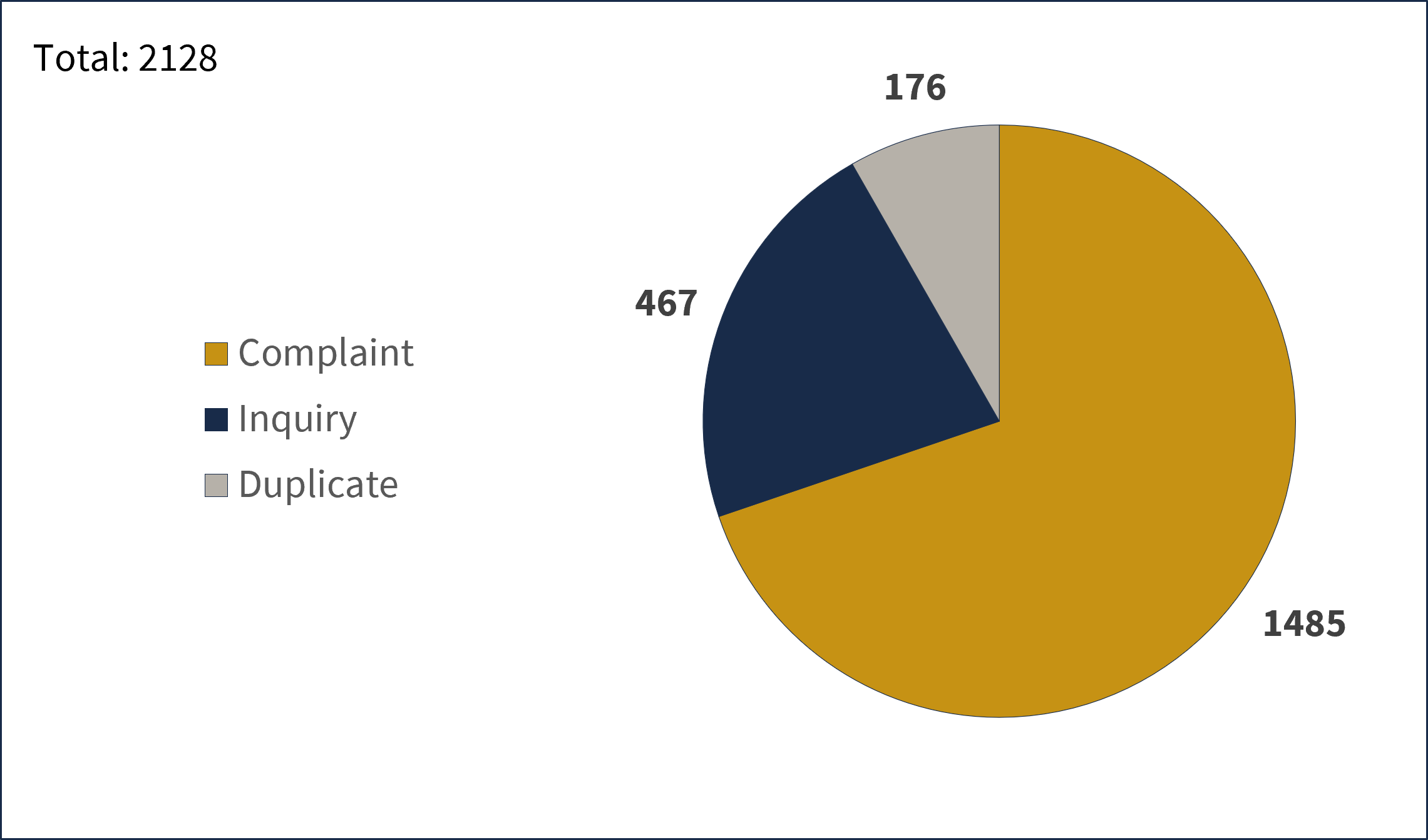
Complaint (70%): alleges prohibited conduct
-
Inquiry (22%): seeks consultation, guidance, or information
-
Duplicate (8%): has the same parties, general information/allegations as another case already in progress; case handlers consolidate duplicate reports into the primary case for processing
-
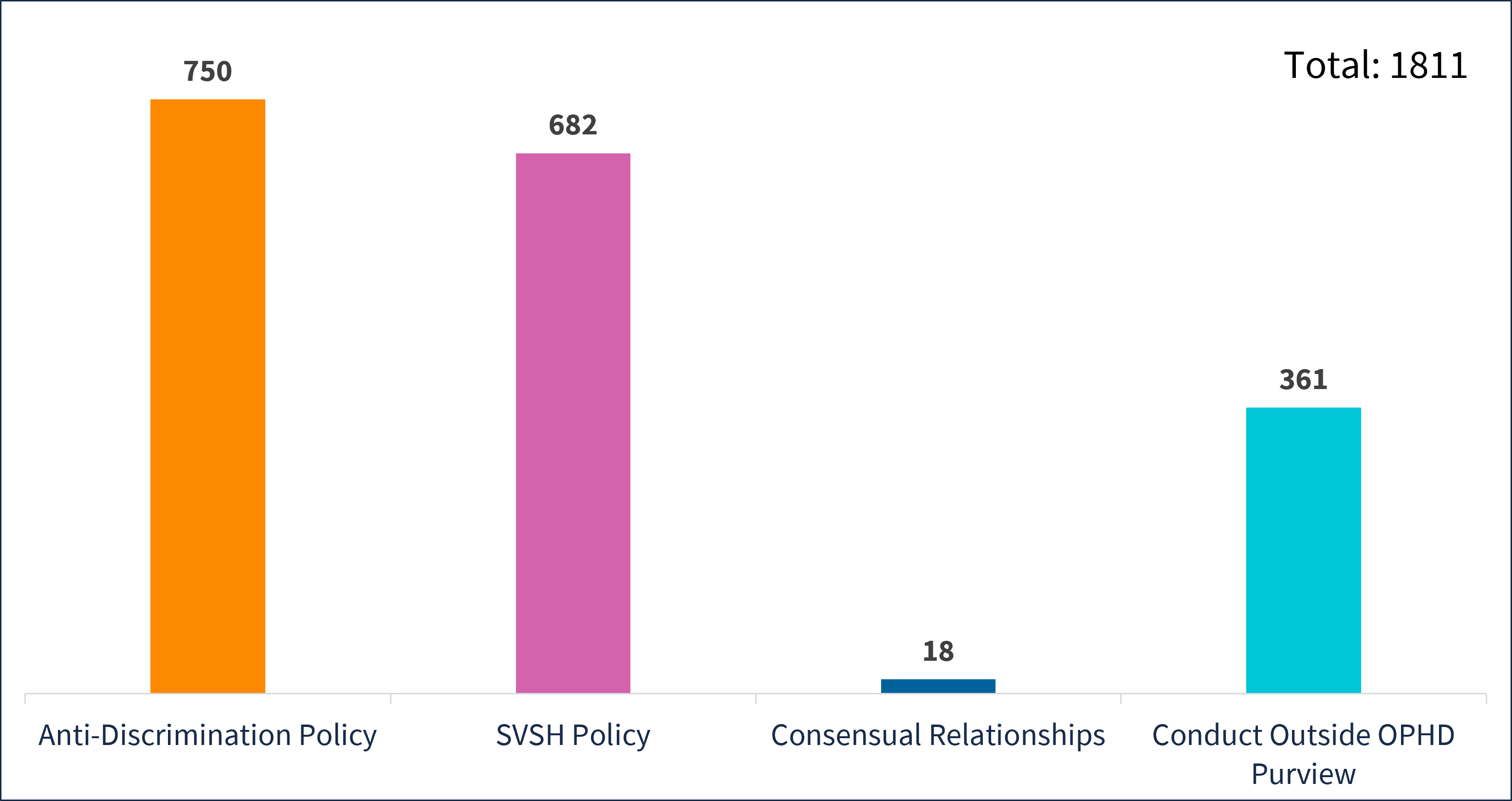
Of the 1811 Issues reported to OPHD:
-
-
-
-
20% (361) did not fall under these policies, and thus were outside of OPHD's purview to address.
-
When an issue falls outside OPHD's purview but may be addressed by other University policies, OPHD may refer the matter to appropriate University personnel or provide parties with additional reporting options.
*More than one issue and/or policy may be included in the same complaint.
-
Harassment, Discrimination, and Protected Categories are defined in the UC Policy on Anti-Discrimination.
-
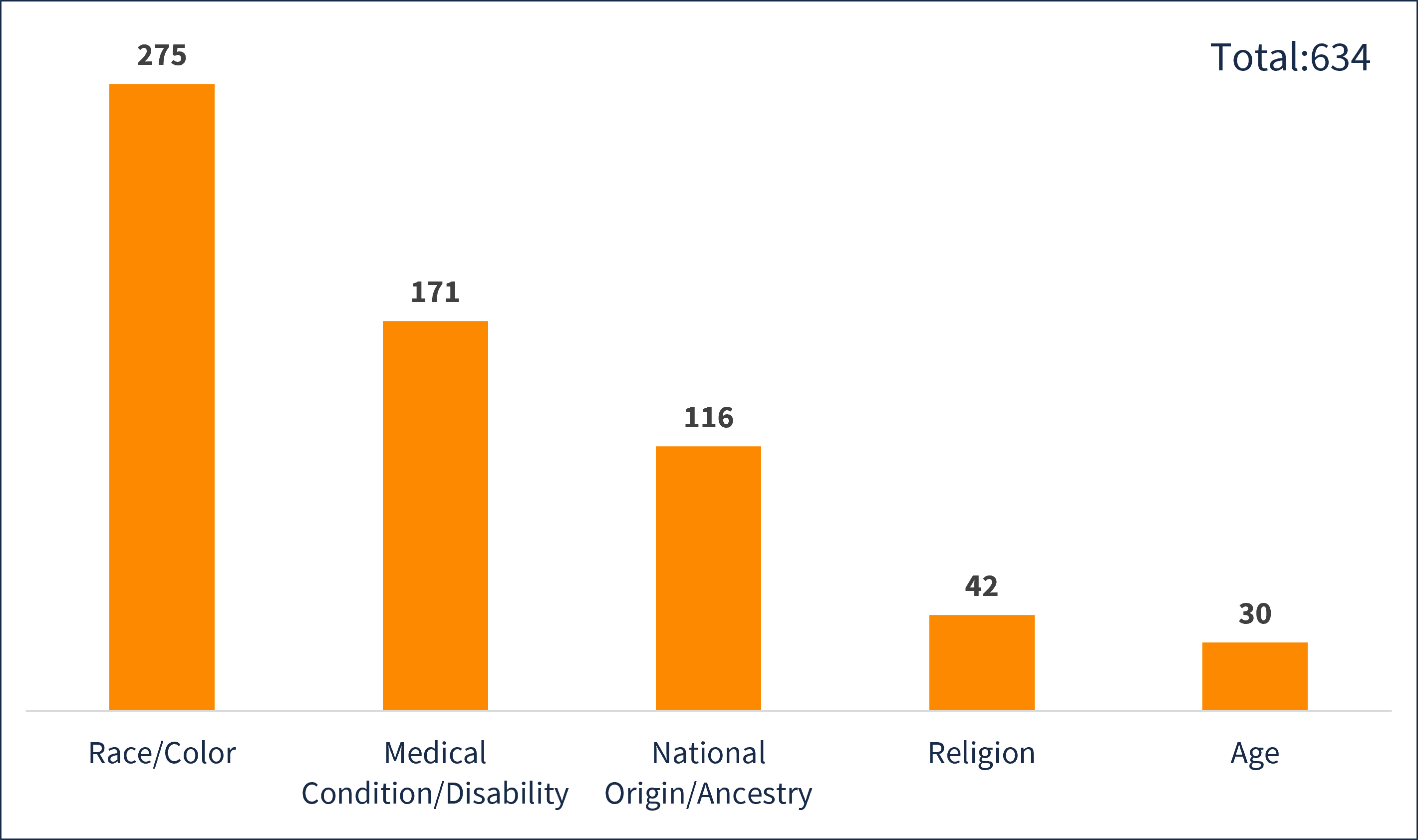
Together, these types of 5 issues comprise 85% (634) of the Anti-Discrimination policy issues reported to OPHD.
-
-
Together, these 5 types of issues comprise 99% (673) of the SVSH policy issues reported to OPHD.
-
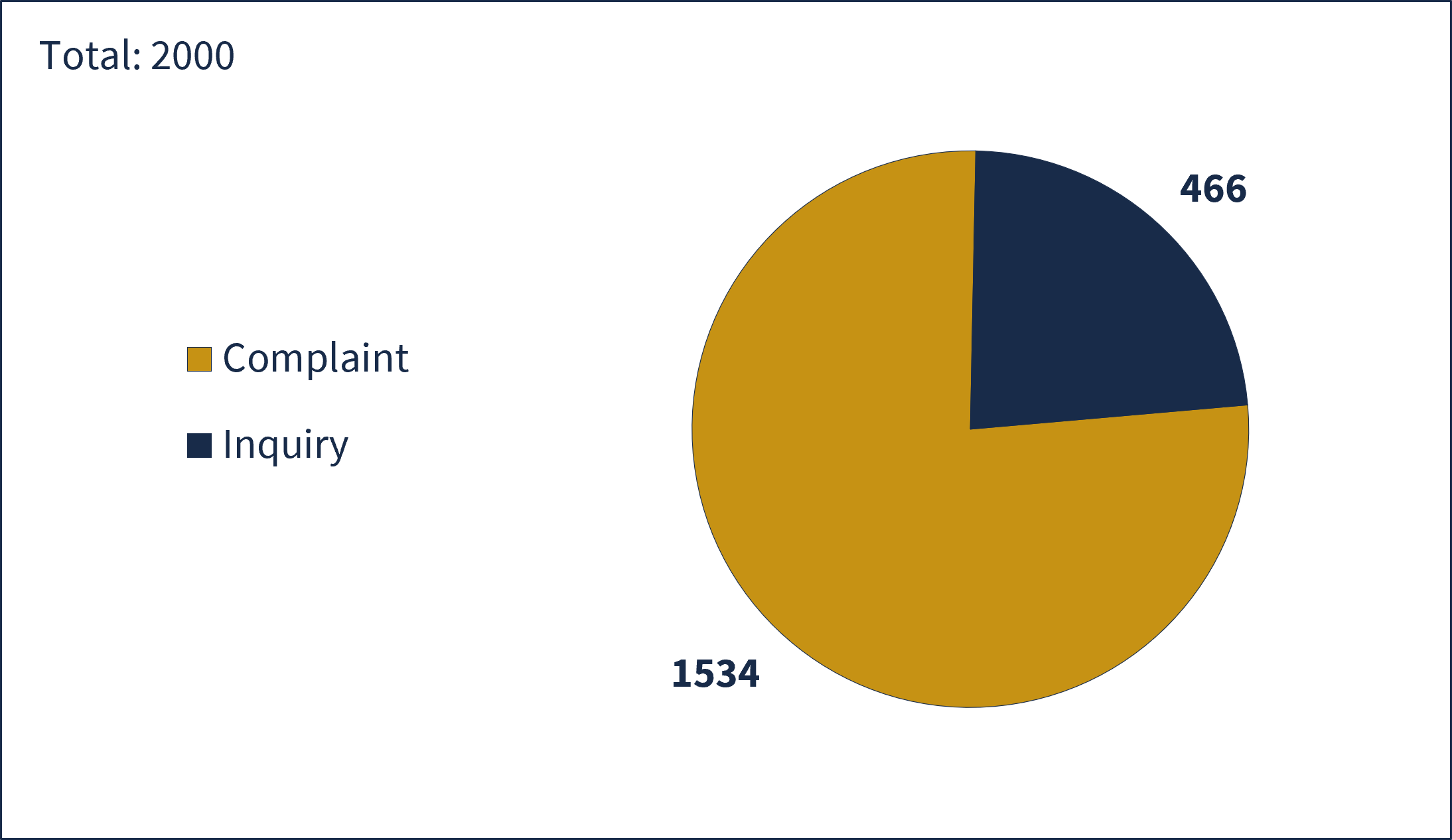
Complaint (77%): alleges prohibited conduct
-
Inquiry (23%): seeks consultation, guidance, or information
-
Of the 1534 complaints OPHD closed:
-
-
9% (136) resolved via preventative measures;
-
3% (46) concluded with formal investigations;
-
0% (2) concluded with another resolution process (such as Other Inquiry or Alternative Resolution).
-
If an initial assessment does not support an OPHD resolution process, the report may be closed. Alternatively, OPHD may take preventative measures to address the concern, such as:
-
A Prevention & Education meeting to share individualized feedback with the Respondent (subject of concern)
-
Unit training to address the reported concerns and/or environmental trends

-
-
39% (737) had insufficient information;
-
41% (769) were not eligible for an OPHD resolution process;
-
15% (278) fell outside of OPHD jurisdiction;
-
4% (85) concluded with formal investigation;
-
1% (16) involved a Complainant who declined to proceed;
-
0% (1) concluded with alternative resolution.
-
There are several reasons why a reported issue may not move forward with an OPHD resolution process. These include:
-
Insufficient information: not enough details to take action (not knowing who made the complaint, who is accused, Complainant does not engage with OPHD).
-
Not eligible for resolution process: After review, OPHD finds the reported conduct does not meet a policy definition of prohibited conduct. A resolution process is not available, but OPHD may still offer education, preventative measures, or support.
-
No jurisdiction: OPHD does not have the authority to address the issue (it may involve people or a location not affiliated with the University).
-
Complainant declines to proceed: The person making the complaint chooses not to move forward with a resolution process.
-
Of the 46 investigations OPHD completed:
-
52% (24) resulted in no policy violation findings;
-
46% (21) resulted in policy violation findings;
-
2% (1) was terminated prior to conclusion.
-
As a single investigation may include multiple issues that result in different findings:
-
Policy Violation Found: the investigation included at least one policy violation (and may have multiple violations)
-
Policy Violation Not Found: the investigation did not include any findings of policy violations
-
Investigation Terminated: a significant change in circumstances has so impaired the investigation that OPHD cannot reliably determine whether the alleged conduct occurred
-
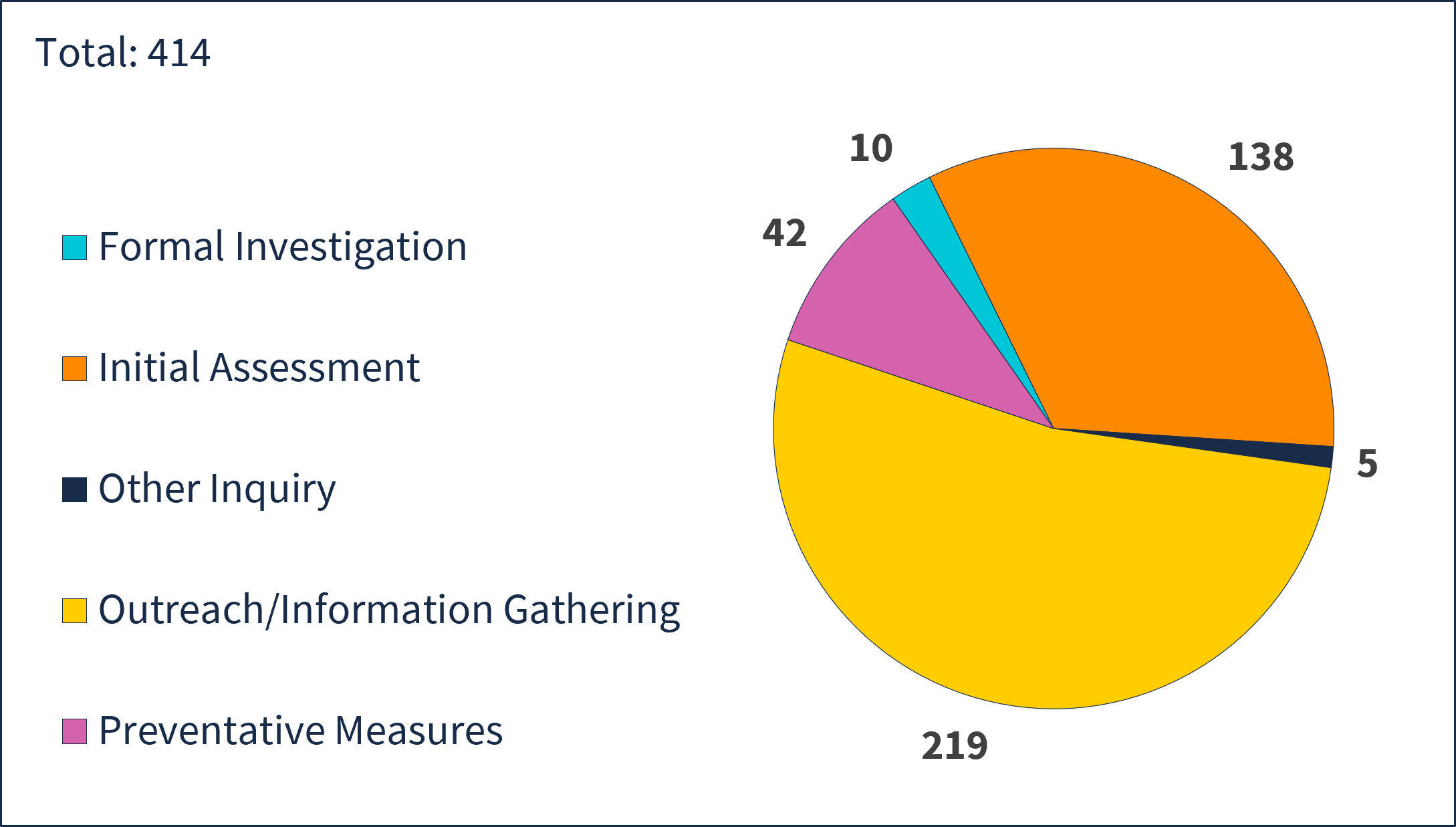
Of the 414 reports that were active on June 30, 2026:
-
53% (219) were in the outreach/information gathering phase;
-
-
-
-
1% (5) was in an other inquiry resolution process.
Comparing Data - Important Note
OPHD's annual dataset includes all reports received by OPHD during the specified Fiscal Year. By comparison, UC San Diego's Annual Security and Fire Safety Report has specific requirements and limitations based on campus location and incident type, as mandated by the Jeanne Clery Act, and collects statistics based on a Calendar Year cycle. These two datasets will differ as a result.